
A joint report by Dell Technologies and Zinnov reveals that despite high ambition, nearly 70% of India's Global Capability Centres (GCCs) are stuck at the pilot stage for AI adoption. Foundational gaps in data, infrastructure, and governance are identified as key bottlenecks preventing the scaling of AI initiatives into enterprise-wide production. The report highlights the need for significant reskilling of the workforce and robust foundations for industrialising AI responsibly.

A joint report by OPPI and EY reveals that India's pharma Global Capability Centres (GCCs) contribute an estimated USD 10.5 billion in GVA and employ 120,000 professionals. These centres, operated by 80% of top biopharma companies, are expanding beyond delivery to global mandates in science, technology, and business, leveraging India's talent, cost advantage, and digital strength. The report highlights their role in India's transition to a global pharma powerhouse driven by research and innovation, with AI becoming central to operations.

NetApp CEO George Kurian advocates for harmonised global AI regulations to simplify compliance and foster business growth. He highlights the complexities arising from diverse regulatory frameworks and the importance of a unified approach, similar to cyber resilience standards. Kurian also notes India's significant role as NetApp's fastest-growing market in Asia, driven by its Bengaluru global capability centre.

Keralam Industries Minister P K Kunhalikutty unveiled the logo and website for COKPIT 2027, a Global Aviation GCC Leadership Summit scheduled for January 2027 in Kochi. The summit aims to position Kochi as a prime destination for aviation Global Capability Centres, attracting industry leaders and showcasing the city's potential as an aviation hub with strong connectivity and existing infrastructure.

Tech hiring demand at India's Global Capability Centres (GCCs) saw a 3.5 per cent sequential decline in Q2 FY27, indicating a slowdown in fresh recruitment. However, demand for specialised skills like AI, data analytics, and cybersecurity professionals continued to rise significantly, with AI and data roles growing 14 per cent quarter-on-quarter.

A new report by BinQle indicates India will face a significant demand-supply gap of artificial intelligence professionals by 2026, requiring 1.4 million AI experts against an available pool of 400,000. This shortage could hinder growth for enterprises and GCCs, driving up salaries and necessitating continuous reskilling and strategic talent development.

Global companies like LG Electronics, Smartworks, Microsoft, and HCL Technologies lauded Uttar Pradesh's investor-friendly policies, infrastructure, and talent at the GCC Innovation Summit 2026. They shared positive experiences, highlighting the state's swift decision-making and commitment to fostering a conducive environment for Global Capability Centres, leading to significant investments and job creation.
NetApp CEO George Kurian announced that India is the company's fastest-growing market in Asia, driven by strong performance in BFSI, manufacturing, IT services, and public sectors. The company's Bengaluru global capability centre is its largest, housing 4,000 engineers and leading global R&D. NetApp also unveiled new AI-focused storage solutions and cloud partnerships at its Insight event.
Jeh Aerospace has inaugurated its Tooling Centre of Excellence in Hyderabad, expanding its capacity for critical aero-engine tooling. The new centre, opened by Telangana Minister D Sridhar Babu, will design, manufacture, and inspect tooling assemblies for aero-engine manufacturing and ground support engineering, aiming to accelerate new programmes and create specialised jobs.

KPMG in India CEO Yezdi Nagporewalla expressed concern over the high valuations of global AI companies, deeming them unsustainable. He believes India, despite a late start, has a strong chance to develop its own unique Local Language Models due to its robust tech ecosystem and global capability centres.
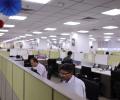
Net office space leasing in India's top eight cities declined by 20 per cent in the January-September period to 36.7 million sq ft, primarily due to limited fresh supply of quality workspaces and a high base effect from the previous year, according to a report by Cushman & Wakefield. Despite this, gross leasing saw a 1 per cent increase, reaching a record 64.6 million sq ft, indicating strong underlying market activity.

The idea addresses an increasingly difficult problem on Earth: Data centres consume enormous amounts of electricity and water.

Indian IT service providers face heightened competition from AI-native firms in the next three years, potentially eroding their revenue base unless they remain competitive and protect recurring businesses, according to a report by S&P Global Ratings.

For the first time, co-working spaces have surpassed the IT/ITeS sector as the largest occupier of office space in India during the January-September period, indicating a significant shift towards flexible workspaces, according to Anarock Research & Advisory.

Ford Business Solutions (FBS) India, the global capability centre for Ford Motor Company, has inaugurated a new office in Coimbatore, its third location in India. This expansion is a strategic move to strengthen the resilience of Ford's global operations, with nearly 50 per cent of its future growth in India expected to be in technology, data science, and data analytics.

Union Finance Minister Nirmala Sitharaman called upon 'Gen Z' and 'Gen Alpha' to assume leadership, prioritise the nation, and contribute to its growth, rather than questioning what the country has done for them.
GE Aerospace is set to significantly increase its supply chain spending in India, targeting USD 400 million by 2030, up from USD 200 million in 2025. This expansion reflects the company's commitment to India's burgeoning aviation market, driven by substantial aircraft orders and the strategic importance of its manufacturing and technology centres in Pune and Bengaluru.

Tata Power is positioning itself as a key partner in India's rapidly expanding data centre ecosystem, with a significant opportunity pipeline across renewable energy, transmission, and distribution. The company is broadening its offerings to include comprehensive solutions like powered land and grid connectivity, actively supporting hyperscalers and AI-ready digital infrastructure, particularly in the Mumbai Metropolitan Region.

Microsoft has inaugurated its India South Central data centre region in Telangana, marking its fourth cloud region in the country and significantly expanding its cloud and AI infrastructure. This strategic investment supports Telangana's ambitious goal of achieving 5 GW of data centre capacity by 2029 and attracting USD 30 billion in digital infrastructure investments, further solidifying Hyderabad's role as a global technology hub.
Microsoft has inaugurated its India South Central data centre region in Telangana, marking its fourth cloud region in the country and significantly expanding its cloud and AI infrastructure. This strategic investment supports Telangana's ambitious goal of achieving 5 GW of data centre capacity by 2029 and attracting USD 30 billion in digital infrastructure investments, further solidifying Hyderabad's role as a global technology hub.
Adani Enterprises and US-based Jabil have signed a non-binding agreement to establish a 50:50 joint venture in India. This JV will manufacture artificial intelligence and data centre equipment, including AI racks, servers, storage, networking gear, and cooling systems, targeting both Indian and global markets. The collaboration aims to capitalise on India's accelerating data centre demand and the surging global investment in AI compute infrastructure.
Cortex DC, a company of The Chatterjee Group (TCG), announced its entry into the data centre market with plans to develop 2 GW of AI-ready capacity across India over the next seven years. The initiative aims to meet the growing demand for high-performance computing, targeting hyperscalers, cloud service providers, and advanced AI workloads with a focus on speed, scale, and sustainable power.
Chief Economic Adviser V Anantha Nageswaran has urged the industry to invest in skilling, capability development, and innovation to counter the challenges posed by artificial intelligence, particularly for Global Capability Centres (GCCs). He noted that while the government has supported GCCs through Budget measures like simplifying transfer pricing and promoting expansion into tier-II/III cities, industry must move beyond low-cost execution to thrive in an an AI-driven landscape. Nageswaran emphasised that AI displaces routine tasks, necessitating a focus on higher-value work and continuous skill enhancement to maintain India's competitive edge.
Microsoft has inaugurated its India South Central datacenter region in Telangana, marking its fourth cloud region in the country. This expansion aims to bolster India's cloud and AI infrastructure, with Telangana targeting 5 GW of datacenter capacity by 2029 and attracting significant investment in the digital ecosystem.

This World Diabetes Day, Dr Vikram Vora, medical director, International SOS, explains why irregular work hours make diabetes harder to prevent and manage. There are simple steps, he says, that you can take to keep yourself healthy.
India is ranked as a "Rising Contender" in AI by Boston Consulting Group (BCG), indicating high readiness but lower disruption exposure. The report highlights India's strength in its large pool of AI specialists and IT-services workforce. While not yet an "AI Pioneer," India is leveraging its talent advantage, with government initiatives like Yuva AI for ALL and IndiaAI FuturesSkills aiming to upskill citizens and broaden access to AI education. The report emphasizes that execution and talent deployment are crucial for economies to gain ground in AI.
The University of Melbourne and the Indian Institute of Science Education and Research (IISER) Tirupati have launched a new 2+2 Bachelor of Science Integrated (Honours) dual degree. This programme offers Indian students a globally connected, research-intensive science education, allowing them to study two years at IISER-Tirupati and two years in Melbourne, graduating with two honours degrees.
HCLTech, India's third-largest IT services company, announced plans to establish a global technology centre and an AI-optimised data centre in Bhubaneswar, Odisha, with a total investment of approximately Rs 15,000 crore, marking its entry into the AI infrastructure business.

Cognizant has launched Phase-1 of its Immersive Learning Center (CILC) in Chennai, aiming to develop talent for AI-powered solutions. The facility, spread across 165,000 square feet, features modern learning infrastructure and supports the company's commitment to scaling its Frontier-certified workforce.
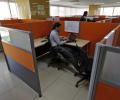
Large office leases in Mumbai and Delhi-NCR are commanding premium rentals in key micro-locations, driven by a scarcity of quality Grade-A space and sustained occupier demand, according to real estate consultants.
An Indian defence engineering company, Paras Defence and Space Technologies, has partnered with US-based BroadPak Corporation to accelerate the development of advanced semiconductor packaging capabilities in India. This collaboration aims to establish a facility for heterogeneous integration and 3D packaging, focusing on critical technologies for AI, high-performance computing, and defence applications.

'This creates a lot of uncertainty. I am not sure if I want to be here, but then a lot of this now depends on my company.'

India has secured a spot among the top 10 leading emerging-market performers in artificial intelligence (AI) readiness, with private investment in AI more than tripling to USD 4.1 billion in 2025, according to a new World Bank report.

Union Home Minister Amit Shah inaugurated the 12th battalion campus of the National Disaster Response Force (NDRF) at Hollongi, Arunachal Pradesh, emphasising a 'zero-casualty' approach to disaster management. The new earthquake-resistant facility aims to significantly enhance disaster preparedness and response across the vulnerable Northeast region, focusing on timely warnings, community participation, and advanced training for NDRF and SDRF personnel.
Delhi-NCR has become India's leading centre for AI-enabled robotic-assisted cardiac surgeries, with 21 installations and approximately 1,800 procedures performed in 2025. Experts predict a 40 per cent rise in 2026, driven by advanced medical infrastructure and growing adoption. This minimally invasive approach offers benefits like reduced trauma and faster recovery, positioning India to potentially surpass the US in such procedures by 2031.

Andhra Pradesh is developing a 25,000 crore space city near Sriharikota, aiming to create a robust ecosystem for private space technology startups and MSMEs, with major deals already signed for rocket engine manufacturing, testing, and R&D.

India is actively integrating payment system harmonisation into its Free Trade Agreement (FTA) negotiations, especially with countries hosting a large Indian diaspora. This strategy aims to leverage India's growing fintech ecosystem, facilitate cross-border financial services, and position India as a global hub for financial services exports, particularly through platforms like GIFT City.

Karnataka Chief Minister D K Shivakumar announced the establishment of India's first government-driven Artificial Intelligence University and an AI Hub in Bengaluru. This initiative aims to position Karnataka as a global leader in responsible AI innovation, fostering talent, research, and collaboration. The state seeks to become an AI-native state, leveraging AI to improve governance and daily life across various sectors.

Roles that mention AI in software development have grown 138 per cent between Q2 2024 and Q2 2026.

The Prince and Princess of Wales, Prince William and Kate Middleton, are set to undertake their first joint overseas visit since the Princess announced her cancer diagnosis, travelling to Mumbai for the 2026 Earthshot Prize awards ceremony and other engagements in India.
